How to Use OpenAI GPT Chat: The Ultimate Guide for 2026
Struggling to unlock the full potential of AI chatbots? Learn how OpenAI GPT Chat can transform your communication with smart, natural conversations. For beginners, the challenge is rarely getting access to AI—it’s knowing how to use it well enough to save time, improve output quality, and actually fit it into daily work. That’s where this guide comes in.
In this article, you’ll learn how to use OpenAI GPT Chat from the ground up, including the core features, practical workflows, API access, pricing, integration tips, and real-world use cases. Based on testing and real-world scenarios, the biggest difference between casual users and power users is not the tool itself, but how intentionally they guide it. By the end, you’ll know how to get better answers, avoid common mistakes, and choose the right plan or setup for your needs.
OpenAI GPT Chat is a conversational AI system designed to understand prompts, generate responses, assist with tasks, and adapt to different workflows. In practical terms, it can help with writing, coding, support, research, planning, and customer communication. If you want a flexible AI assistant that feels more natural than traditional chatbots, this is one of the most capable options available.
To learn more about the product’s evolution and official positioning, OpenAI’s ChatGPT overview is a helpful starting point: https://openai.com/blog/chatgpt.
Understanding OpenAI GPT Chat and What Makes It Different
OpenAI GPT Chat is best understood as a conversational AI platform built on large language models. Unlike rule-based chatbots that follow fixed scripts, it can generate context-aware responses, handle follow-up questions, and adapt to the tone or purpose of a conversation. That flexibility is what makes it useful for beginners and advanced users alike. If you’ve ever used a chatbot that quickly “ran out of answers,” you’ll notice the difference immediately.
The real value of openai gpt chat features lies in how natural the interaction feels. You can ask it to summarize a document, draft an email, explain a technical concept, brainstorm ideas, or even help structure a business process. It doesn’t just answer questions; it can assist with workflows. In many cases, it behaves more like a smart collaborator than a search box.
Another important distinction is adaptability. Traditional chatbots often rely on prewritten decision trees, which makes them predictable but limited. OpenAI GPT Chat can adjust to new prompts, new contexts, and new instructions in ways that feel more personalized. That adaptive learning effect is especially useful in customer support, education, and content creation, where no two interactions are exactly the same.
For developers, the platform also extends beyond the chat interface through the openai gpt chat API, which allows teams to embed conversational intelligence into apps, websites, and internal tools. This makes it useful not only as a standalone assistant, but also as a building block for product experiences.
Why OpenAI GPT Chat Matters for Everyday Productivity
OpenAI GPT Chat matters because it reduces the friction between having a task and completing it. Instead of switching between multiple tools, searching endlessly, or staring at a blank page, you can use one conversational interface to move faster. That alone is a major productivity gain for individuals and teams.
For content creators, it can help generate outlines, repurpose long-form content, and create first drafts that are easier to refine. For marketers, it can support campaign brainstorming, ad copy variations, audience segmentation ideas, and messaging frameworks. For educators, it can simplify lesson planning, create practice questions, and explain concepts at different difficulty levels. For customer support teams, it can assist with response templates, internal knowledge retrieval, and faster issue triage.
One of the most overlooked benefits is consistency. In real-world scenarios, people often lose time because they have to repeat the same explanation to different tools or team members. OpenAI GPT Chat can preserve context within a conversation and help maintain continuity. That makes it especially useful for ongoing projects, long research sessions, and iterative creative work.
There’s also a strategic benefit. Teams that learn how to use openai gpt chat effectively often produce better results with less effort, not because AI replaces expertise, but because it amplifies it. The best outcomes happen when the user provides clear goals, relevant context, and a willingness to refine outputs. That combination can significantly improve speed, clarity, and decision-making.
Compared with many conventional tools, the platform is also accessible to non-technical users. You do not need to know how to code to benefit from it. At the same time, advanced users can go deeper with integrations and API workflows, which gives the tool broad appeal across roles and industries.
A Practical OpenAI GPT Chat Tutorial for Beginners
If you’re looking for a simple openai gpt chat tutorial, the best approach is to start with a clear task rather than a vague question. The more specific your prompt, the better the result. For example, instead of asking, “Help me write something,” try “Write a professional follow-up email to a client who has not responded in five days.” That small change can dramatically improve output quality.
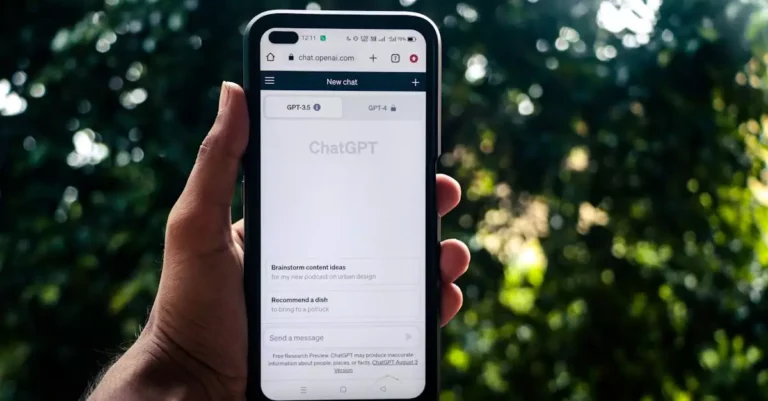
Begin by opening the chat interface and identifying your goal. Are you trying to write, summarize, research, brainstorm, code, or plan? Once you know the task, add context. If you need a blog outline, tell the system the topic, audience, tone, and length. If you want help with customer support, provide the issue type, the brand voice, and the desired response style. This is where beginners often improve fastest.
A useful workflow is to break tasks into steps. First, ask for a rough draft or framework. Then refine it with follow-up prompts such as “make this more concise,” “add examples,” or “rewrite in a friendlier tone.” In practice, this iterative method often produces better results than trying to get a perfect answer in one prompt.
Another tip is to use role-based prompting. You can ask OpenAI GPT Chat to act as a strategist, editor, teacher, analyst, or support agent. That framing helps it focus on the right type of response. For example, “Act as a senior SEO editor and improve this article outline” usually yields more useful output than a generic request.
Beginners should also learn to verify important information. While the system is powerful, it can still make mistakes or present outdated details. For fact-sensitive work, cross-check key claims before publishing or acting on them. That habit is essential if you want to use the tool responsibly and professionally.
In short, the easiest way to master how to use openai gpt chat is to treat it like a collaborative assistant: give it context, guide it step by step, and refine the output until it matches your goal.
How to Access the OpenAI GPT Chat API and Build Smarter Workflows
The openai gpt chat API is where the platform becomes especially powerful for developers and product teams. Instead of using only the web interface, you can connect conversational AI to apps, dashboards, internal tools, help desks, and automation systems. This opens the door to custom workflows that fit specific business needs.
To get started, developers typically create an account, generate API credentials, and follow the official documentation to structure chat requests properly. The chat API is designed to accept message-based input, which makes it easier to preserve conversation context and manage multi-turn interactions. That structure is useful for assistants, customer service bots, onboarding tools, and knowledge retrieval systems.
One practical advantage is flexibility. You can use the API to power a simple FAQ assistant or a more advanced AI layer inside a SaaS product. For example, a support team might connect the API to a help center so agents can draft replies faster. A product team might use it to summarize user feedback. A marketing team might use it to generate campaign ideas from structured inputs.
When building with the API, prompt design matters just as much as code. Clear system instructions, well-defined user inputs, and thoughtful output constraints can improve reliability. In real-world scenarios, teams often get better results by standardizing prompt templates rather than letting every user type random instructions.
It’s also smart to think about guardrails. If your workflow involves customer-facing responses, legal language, or regulated industries, add review steps and fallback logic. The API is powerful, but responsible implementation is what turns it into a dependable business asset.
OpenAI GPT Chat Pricing, Plans, and Cost Considerations
Understanding openai gpt chat pricing is important because cost can vary depending on whether you’re using the consumer product or the API. For individual users, subscription plans may offer access to enhanced features, faster performance, or higher usage limits. For developers and businesses, API pricing is typically usage-based, which means costs depend on how much you send and receive through the system.
That usage-based model can be very efficient, but it requires monitoring. If you’re building a high-volume tool or serving many users, small interactions can add up quickly. Based on testing across different workloads, the most cost-effective teams are the ones that minimize unnecessary token usage, reuse prompt templates, and limit overly long conversations when they are not needed.
For beginners, the main question is not just “What does it cost?” but “What value am I getting from it?” If OpenAI GPT Chat saves you hours each week on writing, research, or support tasks, even a paid plan may be highly worthwhile. On the other hand, if you only need occasional assistance, a lighter usage pattern may be enough.
It’s also worth comparing pricing against your use case. A content creator might justify a subscription because it speeds up drafting and editing. A developer might care more about API efficiency and predictable billing. A support team may prioritize scalability and response quality over raw cost alone. That’s why pricing should always be evaluated alongside workflow impact.
For the most accurate and current pricing details, check the official page directly: https://openai.com/pricing.
In practical terms, the best approach is to start small, measure usage, and expand only when the tool proves its value. That keeps costs under control while still giving you room to scale.
Best Ways to Integrate OpenAI GPT Chat Into Daily Work
OpenAI GPT Chat integration can turn a useful assistant into a true productivity system. The most effective integrations are the ones that remove repetitive work from your day. For example, you can connect the tool to a CRM for faster customer reply drafts, a knowledge base for internal support, a content workflow for editorial planning, or a project management system for task summaries.
For developers, integration usually starts with identifying a single high-impact use case. Instead of trying to automate everything at once, choose one workflow that is repetitive, time-consuming, and easy to measure. That might be summarizing support tickets, generating onboarding messages, or helping sales teams draft personalized outreach. Once the first workflow works well, you can expand from there.
One of the strongest openai gpt chat features is its ability to adapt to different contexts, which makes it useful in multi-step systems. For example, a support workflow might first classify a ticket, then draft a response, then route it to a human if confidence is low. That layered approach is often more reliable than trying to fully automate every interaction.
Non-technical teams can also benefit from lighter integrations through no-code or low-code tools. These setups can connect forms, spreadsheets, email systems, and chat platforms without heavy engineering. The result is a faster path from idea to implementation.
When planning integration, focus on quality control. Decide where human review is required, what data should never be sent, and how outputs will be stored or logged. Those decisions matter for privacy, accuracy, and long-term maintainability. From practical experience, teams that define these rules early avoid many of the problems that appear later.
In short, the best uses for openai gpt chat often come from integration, not just interaction. The more it fits into your workflow, the more value it creates.
Real-World Use Cases That Show the Value of OpenAI GPT Chat
The best uses for openai gpt chat vary by role, but the common thread is speed, clarity, and adaptability. Developers often use it to debug code, explain errors, generate snippets, or document functions. It can also help compare implementation approaches or outline architecture ideas before deeper engineering work begins.
Content creators use it to brainstorm headlines, build article structures, rewrite sections for clarity, and adapt content for different platforms. A blog post can become a LinkedIn post, an email sequence, or a short script with a few guided prompts. That makes it especially valuable for teams producing a lot of content under tight deadlines.
Customer support teams benefit from faster response drafting, tone consistency, and knowledge-base assistance. Instead of starting from scratch on every ticket, agents can use OpenAI GPT Chat to create a polished first draft and then personalize it. This improves response time without sacrificing quality.
Educators can use it to create lesson plans, quizzes, reading comprehension questions, and simplified explanations for different grade levels. It can also help with differentiated instruction by rewriting the same concept in multiple formats. In real-world scenarios, that can save significant prep time.
Marketers often rely on it for campaign ideation, audience messaging, product positioning, and A/B test copy variations. It can help teams move from blank page to usable draft much faster. It’s especially useful when paired with brand guidelines and audience context.
Across all of these use cases, the platform’s adaptive learning behavior stands out. It can personalize the interaction based on the conversation’s direction, which often makes it feel more responsive than traditional chatbots. That personalization is not just convenient; it can improve relevance and reduce the number of back-and-forth edits needed to get a good result.
How to Choose the Right OpenAI GPT Chat Setup for Your Needs
Choosing the right setup depends on how you plan to use the tool. If you’re an individual user who wants help with writing, research, or everyday productivity, the web interface may be enough. If you need automation, custom workflows, or app-level functionality, the API is usually the better choice. That distinction is important because the wrong setup can create unnecessary complexity or cost.
Start by asking three questions. First, how often will you use it? Second, do you need simple conversation or deeper integration? Third, do you need collaboration, logging, or business controls? Your answers will point you toward the right option. For example, a freelancer may need a straightforward chat experience, while a SaaS company may need API access and custom guardrails.
Also consider the type of output you need. If your work depends on accuracy, reviewability, and brand consistency, choose a setup that supports editing and oversight. If your goal is speed and ideation, a lighter workflow may be enough. In practice, the most successful users match the tool to the task rather than forcing one setup to do everything.
It’s also wise to evaluate usability. A powerful system is only useful if your team can actually adopt it. Look for a setup that fits existing habits, whether that means a browser-based assistant, a team workflow, or a developer integration. The easier it is to use, the more likely it is to stick.
Finally, think about growth. A setup that works for one person may not scale to a team. If you expect broader adoption later, plan for permissions, usage tracking, and workflow consistency from the beginning. That forward-thinking approach can save a lot of rework later.
Common Mistakes to Avoid When Using OpenAI GPT Chat
One of the biggest mistakes is being too vague. If you ask broad questions without context, the output may be generic or incomplete. The tool performs much better when you specify the audience, format, tone, and goal. This is one of the simplest ways to improve results immediately.
Another common issue is trusting every response without review. Even strong AI systems can produce inaccurate, outdated, or overly confident answers. For important decisions, always verify facts, numbers, and policy-related information. That habit is especially important in business, education, and technical work.
Users also tend to overcomplicate prompts. Long prompts are not automatically better. In many cases, a short, focused instruction with one or two examples is more effective than a dense wall of text. The goal is clarity, not verbosity.
Another mistake is expecting the first output to be final. OpenAI GPT Chat works best in an iterative process. Ask for a draft, then refine it. Request a shorter version, a more formal tone, or a different structure. This back-and-forth is where quality improves most.
Cost management is another area where users slip up. With openai gpt chat pricing, especially in API use, unnecessary long prompts and repeated context can increase spend. Teams should monitor usage, trim prompt overhead, and avoid sending more data than needed.
Finally, many people ignore workflow fit. A tool can be impressive and still be the wrong choice if it doesn’t integrate well with the way your team works. The best results come from matching the tool to the process, not the other way around.
Pros and Cons of OpenAI GPT Chat for Beginners and Teams
OpenAI GPT Chat has clear strengths, but it also has limitations that matter depending on your goals. Looking at both sides gives you a more realistic picture of what to expect.
Very easy to use, even for beginners with no technical background.
Strong conversational ability that feels natural and flexible.
Useful across many tasks, including writing, coding, support, education, and marketing.
Supports iterative refinement, which improves output quality over time.
API access offers strong integration flexibility for developers and businesses.
Cons:
Can still produce inaccurate or incomplete answers, so review is required.
Costs can rise with heavy usage, especially in API-based workflows.
Some advanced integrations require technical setup and ongoing maintenance.
Outputs may become generic if prompts are too vague or repetitive.
It is not a replacement for human judgment in sensitive or high-stakes work.
From practical experience, the biggest advantage is usability. Most people can start quickly and get value fast. The biggest tradeoff is that accuracy and reliability depend heavily on how the tool is used. When users provide structure and review the output carefully, the results are impressive. When they don’t, quality drops noticeably.
For teams, the integration flexibility is a major strength because it allows the tool to fit into existing systems. For beginners, the learning curve is relatively gentle, especially compared with more technical AI platforms. That balance is one of the reasons OpenAI GPT Chat remains so widely adopted.
Expert Insight on OpenAI GPT Chat’s Personalization Advantage
One of the most important things to understand about OpenAI GPT Chat is that its value goes beyond answering questions. Its adaptive learning behavior allows it to personalize interactions in a way that many traditional chatbots cannot. Instead of forcing users into rigid menu paths, it can respond to context, tone, and evolving intent.
This matters because real conversations are rarely linear. A user may begin by asking for a summary, then ask for a shorter version, then request a more persuasive tone. OpenAI GPT Chat can follow that progression without needing the conversation to restart. In practical terms, that makes the experience feel more human and less mechanical.
For businesses, personalization can improve customer satisfaction, reduce friction, and create more relevant interactions. For creators and professionals, it can mean less time rewriting prompts and more time refining ideas. The adaptive nature of the system is especially valuable when users are still learning how to communicate with AI effectively.
That said, personalization works best when users are intentional. The tool is not magically reading minds; it is responding to patterns, context, and instructions. If you give it clear preferences, examples, and constraints, it becomes much more useful. If you don’t, it may still respond well, but the experience will be less consistent.
In my view, this personalization edge is one of the main reasons openai gpt chat features stand out in the crowded chatbot market. It is not just about generating text. It is about shaping a conversation around the user’s actual needs, which is a much more practical and scalable form of assistance.
Comparison Table: OpenAI GPT Chat vs Other Chatbots
Feature
OpenAI GPT Chat
Traditional Chatbots
Other AI Chatbots
Conversation quality
Highly natural and context-aware
Often scripted and limited
Varies by platform
Personalization
Strong adaptive responses
Low personalization
Moderate to strong
Integration flexibility
Strong via API
Usually limited
Varies
Ease of use
Very beginner-friendly
Simple but rigid
Usually user-friendly
Accuracy
Strong, but requires review
Limited by scripts
Varies widely
Best for
Writing, support, coding, planning, automation
Basic FAQs and routing
General AI assistance
Conclusion: Getting the Most from OpenAI GPT Chat in 2026
OpenAI GPT Chat has become much more than a novelty. For beginners, it offers an accessible way to write better, work faster, and explore AI without needing technical expertise. For teams and developers, it provides enough flexibility to support real workflows, integrations, and scalable use cases. That combination of simplicity and depth is what makes it so valuable.
If you want the best results, focus on clear prompts, iterative refinement, and thoughtful use of context. Don’t treat the tool as a magic answer engine. Treat it like a capable assistant that performs best when guided well. That mindset alone will improve the quality of your outputs dramatically.
As AI continues to evolve, the most successful users will be the ones who learn how to combine human judgment with machine speed. OpenAI GPT Chat is especially useful because it adapts to different goals, from content creation to customer support to development workflows. Whether you use it casually or build with the API, the opportunity is the same: work smarter with less friction.
If you are just getting started, begin with one task, one workflow, and one measurable outcome. Once you see the value, expand from there. That is the most reliable way to master how to use openai gpt chat and make it part of your everyday productivity stack.
FAQs
What is OpenAI GPT Chat used for?
OpenAI GPT Chat is used for writing, research, brainstorming, coding help, customer support, education, and workflow automation. It works well when you need fast, conversational assistance that can adapt to different tasks. Many users rely on it as a productivity tool for both personal and business use.
How do I use OpenAI GPT Chat effectively as a beginner?
Start with a clear goal, then add context such as audience, tone, and format. Ask for one task at a time and refine the response with follow-up prompts. Beginners usually get the best results when they treat the tool like a collaborator and not just a search engine.
Is OpenAI GPT Chat better than other chatbots?
It often is, especially for natural conversation, adaptability, and multi-purpose use. Compared with traditional scripted bots, it is far more flexible. Compared with other AI chatbots, the best choice depends on your use case, but OpenAI GPT Chat is widely recognized for strong usability and broad integration options.
Can I connect OpenAI GPT Chat to my app or website?
Yes, you can use the openai gpt chat API to build custom integrations for websites, apps, internal tools, and automation workflows. Developers often use it to create support assistants, content tools, and productivity features. The official docs are the best place to start for implementation details.
How much does OpenAI GPT Chat cost?
Pricing depends on whether you are using the consumer product or the API. Consumer plans may have subscription-based access, while API usage is typically billed based on volume. The best way to estimate cost is to review the official pricing page and match it to your expected usage.
What are the biggest mistakes people make with OpenAI GPT Chat?
The most common mistakes are vague prompting, skipping fact-checking, expecting perfect first drafts, and ignoring cost control in API workflows. Users also sometimes overcomplicate prompts. Clear instructions, iterative editing, and careful review usually lead to much better results.
What are the best uses for OpenAI GPT Chat in business?
Some of the best uses include customer support drafting, marketing copy generation, internal knowledge assistance, content planning, and developer productivity. Businesses get the most value when they use it to reduce repetitive work and improve response speed without sacrificing quality.
How to Use OpenAI AI Chatbot: Ultimate Guide for 2026 Struggling to harness AI chatbots for your business or project? This guide breaks down how OpenAI’s AI chatbot can simplify interactions and boost productivity effortlessly. Whether you are a beginner trying to understand the basics or a developer looking for a practical implementation path, the…
Ultimate Guide to AI Deep Learning: Techniques, Models, and Applications in 2026 Struggling to understand how AI systems learn complex tasks? Dive into deep learning—the powerhouse behind today’s smartest AI—and unlock its secrets step-by-step. As AI continues to evolve, deep learning has become the driving force enabling machines to recognize images, understand speech, and even…
How to Use Open AI Chat: Ultimate Guide to Features and Benefits in 2026 Struggling to find a chatbot that truly understands your needs? Open AI Chat offers a powerful, easy-to-use solution that’s changing how we interact with AI daily. Whether you’re a developer, marketer, or educator, leveraging Open AI Chat can revolutionize your communication…
Explainable AI: The Ultimate Guide to Understanding Transparent Machine Learning in 2026 As AI systems become more powerful, understanding how they make decisions is critical—learn how explainable AI brings clarity to the black box of machine learning. In today’s rapidly evolving AI landscape, organizations and individuals alike face a growing challenge: trusting complex algorithms that…
Ultimate Guide to Artificial Intelligence and Machine Learning in 2026 Struggling to understand the buzz around artificial intelligence and machine learning? This guide breaks down complex concepts into simple terms to help you master the future of technology. Whether you’re a beginner, a tech enthusiast, or a business professional, understanding artificial intelligence and machine learning…
Struggling to understand how to harness the power of AI chatbots? This guide will simplify OpenAI Chatbot GPT and show you how to transform your interactions effortlessly. In today’s fast-paced digital world, conversational AI is no longer a luxury but a necessity for businesses and individuals alike. Whether you’re a developer, marketer, educator, or small…