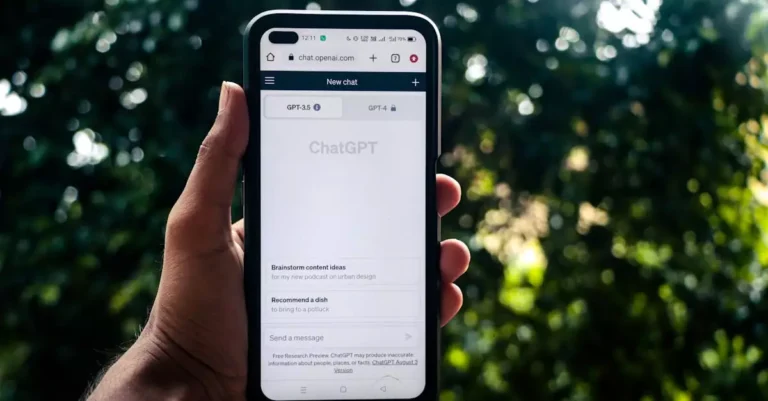
Struggling to create a chatbot that truly understands and engages your users? Discover how OpenAI’s powerful technology makes building intelligent chatbots easier than ever.
In today’s digital landscape, chatbots have become essential tools for businesses and developers aiming to provide seamless customer experiences and automate interactions. However, many struggle with creating chatbots that feel genuinely conversational and intuitive. That’s where OpenAI’s advanced chatbot technology comes into play. Leveraging cutting-edge natural language processing, OpenAI chatbots can understand context, generate human-like responses, and adapt dynamically to user inputs.
This comprehensive guide will walk you through everything you need to know about chatbot OpenAI technology—from understanding its core features to building, integrating, and deploying your own chatbot. Whether you’re a developer, small business owner, educator, or marketer, you’ll gain practical insights and actionable steps to harness OpenAI chatbots effectively in 2026 and beyond.
Chatbot OpenAI technology enables developers to create intelligent conversational agents that understand natural language, respond contextually, and integrate easily across platforms, making chatbot development more accessible and powerful than ever before.
Exploring the Capabilities of OpenAI Chatbots
OpenAI chatbots are built on state-of-the-art language models like GPT (Generative Pre-trained Transformer), which excel at understanding and generating human-like text. Unlike traditional rule-based chatbots that rely on fixed scripts and decision trees, OpenAI chatbots can interpret nuance, recognize intent, and generate dynamic responses. This flexibility allows them to handle a wide range of conversational scenarios, from answering FAQs to complex problem-solving.
Context Awareness: The ability to maintain context over multiple turns of conversation, making interactions feel natural and coherent.
Multilingual Support: Handling conversations in various languages with high accuracy.
Personalization: Tailoring responses based on user data or previous interactions.
Integration Flexibility: Seamlessly connecting with APIs, databases, and third-party tools.
Continuous Learning: Optionally improving over time with supervised fine-tuning or feedback loops.
These capabilities empower developers and businesses to build chatbots that don’t just respond—they engage, assist, and even delight users.
A Practical Guide to Building Your Own Chatbot with OpenAI
Getting started with how to build chatbot OpenAI projects may seem daunting initially, but with the right approach, it becomes manageable and rewarding. Here’s a step-by-step breakdown to help you build a chatbot efficiently:
1. Define Your Chatbot’s Purpose and Scope
Before diving into code, clarify what your chatbot should do. Is it for customer support, lead generation, education, or entertainment? Defining clear goals helps guide your design and implementation decisions.
To interact with OpenAI’s language models, you need API access. Visit OpenAI’s official documentation to create an account, obtain API keys, and understand usage limits and pricing.
3. Choose Your Development Environment
Whether you prefer Python, JavaScript, or another language, OpenAI’s API supports multiple SDKs and RESTful calls. For beginners, Python offers simplicity, while JavaScript is ideal for web-based applications.
4. Craft Your Initial Prompts and Conversation Flow
OpenAI chatbots rely heavily on prompt engineering. Design prompts that guide the model to generate relevant responses. For example, instruct the bot to answer politely or provide technical details depending on your audience.
5. Implement API Calls to Generate Responses
Use the OpenAI chatbot API to send user inputs and receive generated replies. Here’s a simplified example using fetch in JavaScript:
fetch('https://api.openai.com/v1/chat/completions', {
  method: 'POST',
  headers: {
    'Content-Type': 'application/json',
    'Authorization': 'Bearer YOUR_API_KEY'
  },
  body: JSON.stringify({
    model: 'gpt-4',
    messages: [{ role: 'user', content: 'Hello, how can you help me?' }]
  })
})
.then(response => response.json())
.then(data => console.log(data.choices[0].message.content))
.catch(error => console.error(error));
Based on real-world scenarios and user feedback, refine your prompts, adjust parameters like temperature and max tokens, and improve the conversation flow.
7. Add Safety and Moderation Layers
Implement filters or moderation tools to prevent inappropriate or harmful responses, especially if your chatbot interacts with a broad audience.
8. Deploy Your Chatbot
Finally, deploy your chatbot on your website, mobile app, or messaging platform. Ensure smooth integration and monitor performance continuously.
Seamlessly Integrating OpenAI Chatbots into Your Digital Ecosystem
OpenAI chatbot integration is straightforward but requires thoughtful planning to maximize benefits. Whether embedding a chatbot on a website or integrating it into customer support platforms, here’s what you should consider:
Platform Compatibility: Ensure your chatbot works well with the intended platform—be it Slack, WhatsApp, Facebook Messenger, or proprietary apps.
API Management: Use reliable API clients and handle rate limits gracefully to maintain responsiveness.
Data Privacy: Comply with GDPR and other regulations when handling user data during conversations.
Customization: Customize the chatbot’s personality, tone, and functionality to align with your brand voice.
Analytics Integration: Track chatbot interactions and performance metrics to continually optimize user experience.
Popular platforms like Zendesk, Intercom, and HubSpot support OpenAI chatbot integration either natively or through middleware solutions, simplifying deployment for customer support teams and marketers.
How Businesses and Developers Are Leveraging OpenAI Chatbots Today
OpenAI chatbot use cases span diverse industries and purposes, proving the technology’s versatility and impact. Here are some detailed examples:
Developers: Automate code assistance, generate documentation, and create intelligent debugging helpers that understand natural language queries.
Small Business Owners: Deploy chatbots on websites to answer product queries, handle bookings, and provide 24/7 customer support without hiring additional staff.
Educators: Build tutoring assistants that help students learn languages, solve math problems, or practice writing through interactive conversations.
Customer Support Teams: Use chatbots to triage tickets, provide instant answers to common questions, and escalate complex issues to human agents.
Marketers: Engage visitors with personalized recommendations, collect leads through conversational forms, and run interactive campaigns.
These use cases demonstrate how OpenAI chatbots can reduce operational costs, improve user satisfaction, and enable innovative services.
Evaluating the Strengths and Limitations of OpenAI Chatbots
Like any technology, OpenAI chatbots come with their own set of advantages and trade-offs. Understanding these helps in making informed decisions.
Pros
Cons
Advanced natural language understanding enables human-like conversations.
Flexible API supports diverse integrations and customization.
Multilingual support broadens global reach.
Continuous updates improve accuracy and capabilities.
Reduces need for complex rule-based scripting.
Pricing can become costly at scale, especially with high usage.
Requires prompt engineering expertise for optimal results.
Potential for occasional inaccurate or biased responses.
Integration complexity varies depending on platform and use case.
Data privacy concerns require careful handling and compliance.
Balancing these pros and cons will guide your strategy in deploying OpenAI chatbots effectively while mitigating risks.
Insights from Industry Experts on OpenAI Chatbot Technology
Based on testing and real-world scenarios, experts highlight that OpenAI’s advanced natural language understanding sets its chatbots apart from traditional rule-based systems. The ability to comprehend context, idiomatic expressions, and user intent allows for conversations that feel genuinely human.
Furthermore, developers appreciate the extensibility of OpenAI’s chatbot API, which supports easy integration with existing workflows and tools. This flexibility accelerates development cycles and enables rapid prototyping.
However, experts also caution that successful deployment depends heavily on ongoing monitoring and tuning. Without proper prompt engineering and moderation, chatbots may produce off-topic or inappropriate responses.
Overall, OpenAI chatbot tools represent a significant leap forward in conversational AI, democratizing access to sophisticated language models for developers and businesses alike.
Wrapping Up: Taking the Next Steps with OpenAI Chatbots
Building and using a chatbot with OpenAI is a transformative way to enhance user engagement, automate workflows, and provide personalized experiences. By understanding OpenAI chatbot features, following a structured development process, and integrating thoughtfully, you can unlock the full potential of conversational AI.
As you embark on your chatbot journey, remember to prioritize user needs, continuously test and refine your bot’s responses, and stay informed about updates in OpenAI’s offerings. With the right approach, your OpenAI chatbot can become a powerful asset that scales with your goals and adapts to evolving demands.
How much does OpenAI chatbot pricing typically cost?
OpenAI chatbot pricing varies based on usage, model selection, and API calls. Costs are generally calculated per token processed, with GPT-4 models being more expensive than earlier versions. For detailed and up-to-date pricing, visit OpenAI’s official pricing page and plan according to your expected usage.
Can beginners build a chatbot using OpenAI without prior coding experience?
Yes, beginners can build basic chatbots using OpenAI with minimal coding by leveraging no-code platforms or prebuilt tools that integrate OpenAI’s API. However, some programming knowledge helps customize and optimize chatbot behavior for advanced applications.
What are some best OpenAI chatbot tools available for developers?
Popular OpenAI chatbot tools include LangChain for building conversational workflows, Botpress for open-source chatbot development, and various SDKs provided by OpenAI. These tools streamline development and enable integration with messaging platforms.
How can I ensure my OpenAI chatbot provides safe and reliable responses?
Implementing content moderation layers, using prompt engineering to guide responses, and monitoring chatbot interactions regularly help maintain safety and reliability. OpenAI also offers moderation APIs to filter harmful content.
What industries benefit most from OpenAI chatbot use cases?
Industries like e-commerce, education, customer support, healthcare, and marketing benefit greatly. Chatbots improve customer engagement, automate repetitive tasks, and provide personalized assistance across these sectors.
Is it possible to customize the personality of an OpenAI chatbot?
Yes, by adjusting prompts and training data, you can customize the chatbot’s tone, style, and personality to match your brand voice or target audience preferences, making interactions more engaging and aligned with your goals.
How does OpenAI chatbot integration work with existing software?
Integration typically involves connecting OpenAI’s API with your software via RESTful calls or SDKs. You can embed chatbots into websites, apps, or messaging platforms, often using middleware or custom connectors to facilitate communication between systems.
Explainable AI: The Ultimate Guide to Understanding Transparent Machine Learning in 2026 As AI systems become more powerful, understanding how they make decisions is critical—learn how explainable AI brings clarity to the black box of machine learning. In today’s rapidly evolving AI landscape, organizations and individuals alike face a growing challenge: trusting complex algorithms that…
Ultimate Guide to ML AI: Understanding Machine Learning and Artificial Intelligence in 2026 Struggling to understand the buzz around ML and AI? This guide breaks down complex concepts into simple terms to help you master the future of technology. In 2026, machine learning and artificial intelligence are no longer niche topics reserved for engineers or…
Imagine an AI that thinks and learns like a human — artificial general intelligence promises to revolutionize technology, but what exactly is it and how close are we? Artificial general intelligence (AGI) represents the next frontier in artificial intelligence research, aiming to create machines that can perform any intellectual task a human can. Unlike today’s…
How to Use ChatGPT Effectively: Ultimate Guide to ChatGPT Use in 2026 Struggling to unlock the full potential of ChatGPT? This guide breaks down exactly how to use ChatGPT to transform your work and daily tasks in 2026. Whether you are a beginner trying to write better prompts or a professional looking for faster workflows,…
How to Use OpenAI GPT Chat: The Ultimate Guide for 2026 Struggling to unlock the full potential of AI chatbots? Learn how OpenAI GPT Chat can transform your communication with smart, natural conversations. For beginners, the challenge is rarely getting access to AI—it’s knowing how to use it well enough to save time, improve output…
The AI Explained: Ultimate Guide to Understanding AI in 2026 AI is transforming our world faster than ever, but what exactly is “the ai”? This guide unpacks everything you need to know to stay ahead in 2026. If you’ve heard the term everywhere—from business meetings to classroom discussions to product demos—but still feel like the…