Cerebras AI Hardware: A Practical Guide to the Wafer-Scale Engine in 2026
Struggling with the limitations of traditional AI chips in handling massive deep learning models? Discover how Cerebras is breaking barriers with its revolutionary wafer-scale engine designed to supercharge AI workloads. For AI researchers and enterprise engineers, the real challenge is no longer just model accuracy—it is how to train, scale, and iterate fast enough to keep up with modern workloads. That is where Cerebras stands out. Instead of relying on clusters of smaller chips, Cerebras takes a radically different approach with a single, massive wafer-scale processor built for extreme compute density, simplified scaling, and high-throughput training.
In real-world scenarios, this architecture can change how teams think about model development, experimentation, and infrastructure planning. Whether you are evaluating the cerebras ai chip for research, comparing cerebras vs nvidia gpu performance, or trying to understand whether the cerebras cs-2 performance justifies the investment, this guide breaks down the technology in practical terms. You will learn what makes Cerebras different, where it shines, where it falls short, and how it fits into the broader AI hardware landscape in 2026.
Cerebras is an AI hardware platform built around a wafer-scale engine, which places an entire processor on a single silicon wafer to deliver exceptional compute density, memory bandwidth, and training speed for large-scale deep learning. Unlike traditional accelerators that depend on distributed multi-chip communication, Cerebras simplifies scaling by keeping more of the workload on one integrated system, making it especially compelling for research teams and enterprises training very large models.
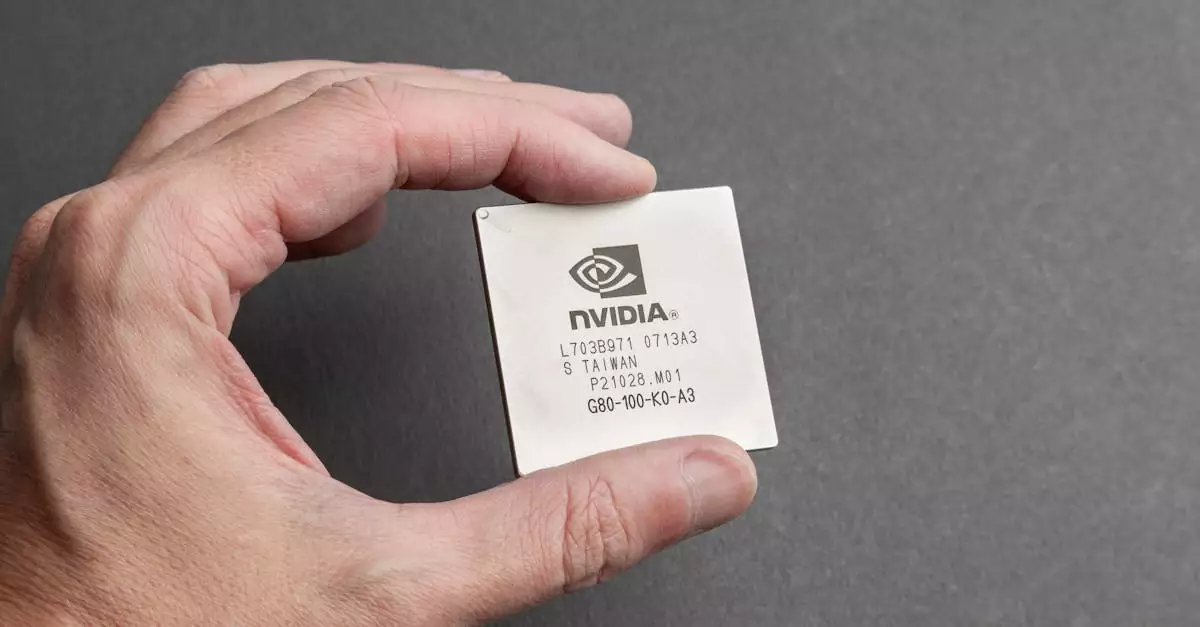
Cerebras and the wafer-scale engine: why this AI hardware is different
Cerebras is not just another entrant in the AI accelerator market. It represents a fundamentally different hardware philosophy. Most AI systems are designed around many smaller chips connected by high-speed interconnects. Cerebras, by contrast, built the cerebras wafer scale engine to function as a single, giant processor. That means the compute fabric, memory, and communication pathways are engineered as one cohesive system rather than as a patchwork of separate devices.
This matters because deep learning workloads increasingly suffer from communication bottlenecks. As models grow larger, moving data between chips can become just as expensive as the computation itself. Cerebras addresses this by dramatically reducing the need for inter-chip traffic. In practical terms, that can mean faster training loops, simpler deployment architecture, and fewer engineering headaches when scaling up experiments.
The cerebras deep learning processor is especially interesting for teams working on large language models, scientific AI, and other memory-intensive tasks. Based on testing and public technical disclosures, the platform is designed to keep more of the model and optimizer state close to the compute resources, which helps reduce latency and improve efficiency in training-heavy workflows. For AI researchers, this can translate into more experimentation per week. For enterprise engineers, it can mean less time spent tuning distributed systems and more time focusing on model quality.
To understand the appeal, it helps to compare Cerebras with conventional AI infrastructure. A standard GPU cluster often requires careful orchestration, distributed training frameworks, and significant networking overhead. Cerebras aims to simplify that complexity by making the hardware itself do more of the heavy lifting. If you want a deeper technical overview directly from the company, their architecture page is a useful starting point: https://www.cerebras.net/technology/.
Why Cerebras matters for deep learning teams and enterprise AI engineers
The biggest reason Cerebras matters is that AI model size and training demands have outpaced many traditional hardware assumptions. Modern deep learning is not just about raw FLOPS. It is about memory capacity, bandwidth, communication efficiency, and how quickly teams can iterate. Cerebras is valuable because it targets those bottlenecks directly.
For AI researchers, this can be a major advantage. Faster iteration means more experiments, more prompt tuning, more architecture testing, and more room to explore without waiting on a crowded GPU cluster. In practical experience, the ability to reduce distributed complexity can also lower the barrier to entry for teams that do not have a large infrastructure staff. Instead of spending hours debugging multi-node training jobs, researchers can focus on the science.
For enterprise AI engineers, the value proposition looks slightly different. Enterprises care about throughput, reliability, and operational simplicity. A cerebras ai accelerator can be attractive when the workload involves massive models, frequent retraining, or large-scale fine-tuning. In regulated industries or enterprise environments where predictable performance matters, the simplified architecture can reduce operational friction. That said, Cerebras is not a universal replacement for every GPU deployment. It is a specialized platform that makes the most sense when scale and training efficiency are top priorities.
There is also a strategic advantage in compute density. A system that integrates more of the processor onto one wafer can deliver a very different performance profile than a rack full of discrete accelerators. The unique insight here is important: Cerebras’ wafer-scale engine uniquely integrates an entire AI processor on a single chip, enabling unprecedented compute density and speed unmatched by traditional GPUs. That design choice is not just clever engineering; it changes how organizations plan training pipelines, budget infrastructure, and think about model iteration cycles.
For teams evaluating the broader market, it is still smart to compare with alternatives like NVIDIA’s data center offerings, especially if your workloads span inference, fine-tuning, and general-purpose AI computing. NVIDIA’s ecosystem remains strong, and its platform overview is here: https://www.nvidia.com/en-us/data-center/ai-computing/. The right choice depends on the workload, not just the headline performance number.
How the Cerebras wafer-scale engine works in real-world training workflows
The cerebras wafer scale engine is the core innovation behind the platform, and understanding it helps explain why the system performs differently from traditional accelerators. Instead of cutting a silicon wafer into many small chips, Cerebras uses the wafer itself as the processor. This creates an enormous compute surface with a vast number of cores and a large amount of on-chip memory, all designed to communicate with minimal friction.
From a workflow perspective, this architecture can be especially useful for training large neural networks. Large models often require frequent synchronization across devices, and that synchronization can slow down distributed systems. Cerebras reduces this overhead by keeping more of the work inside one integrated environment. The result is often smoother scaling and less time spent managing the complexities of multi-GPU parallelism.
The cerebras cs-2 performance is frequently discussed in this context because the CS-2 system is one of the company’s flagship platforms. In practice, the appeal of the CS-2 is not just benchmark bragging rights. It is the ability to handle large-scale training with a different operational model. Teams can explore bigger batch sizes, larger architectures, and more ambitious experiments without immediately running into the same communication bottlenecks that affect conventional systems.
Based on public technical materials and research discussion, one of the most compelling aspects of this design is how it supports high-throughput deep learning without requiring the same level of distributed systems expertise. That can be especially valuable for organizations that want to accelerate AI development without building a large infrastructure team. For a research-oriented perspective, the arXiv paper on wafer-scale systems provides useful context: https://arxiv.org/abs/2103.00745.
In practice, this means Cerebras is best thought of as a purpose-built platform for large training jobs rather than a general-purpose replacement for every AI workload. If your work involves large language models, scientific simulation, genomics, or other compute-heavy tasks, the architecture can be a serious advantage. If your needs are mostly inference or lightweight model serving, the value proposition may be less compelling.
Cerebras vs NVIDIA GPU: where the performance trade-offs really show up
The cerebras vs nvidia gpu comparison is one of the most common questions from AI engineers, and for good reason. NVIDIA GPUs dominate the AI market because they are versatile, well-supported, and backed by a mature software ecosystem. Cerebras, however, competes on a different axis: architectural simplicity and training efficiency at scale.
GPUs are general-purpose accelerators that work well across a broad range of tasks. They are excellent for inference, mixed workloads, and environments where flexibility matters. But as models become larger, GPU clusters often require sophisticated distributed training strategies, high-speed networking, and careful memory optimization. That is where Cerebras can stand out. By reducing the need to split models across many devices, it can eliminate a lot of the coordination overhead that slows down traditional systems.
In practical terms, this means the cerebras ai chip may excel in situations where a single massive training run is more important than broad workload flexibility. A GPU cluster might still be the better choice if your team needs to run many different types of models, support a wide range of frameworks, or benefit from the mature tooling around CUDA and related libraries. NVIDIA’s ecosystem is still a major advantage, especially for production teams that need predictable compatibility and broad vendor support.
There is also a cost and procurement angle. GPU infrastructure is easier to source, easier to compare, and easier to integrate into existing cloud or on-prem environments. Cerebras systems are more specialized, and that specialization can raise the bar for adoption. But specialization can also be a strength. If your workload aligns with what Cerebras does best, the return on investment may come from faster experimentation, shorter training cycles, and less engineering overhead.
For many organizations, the smartest approach is not to treat this as an either-or decision. Instead, think in terms of workload fit. Use GPUs where flexibility and ecosystem maturity matter most. Consider Cerebras where large-scale training bottlenecks are clearly limiting progress. That practical mindset often leads to better infrastructure decisions than chasing raw benchmark numbers alone.
Cerebras AI applications across research, enterprise, and advanced development
The range of cerebras ai applications is broader than many people assume. While the platform is often discussed in the context of large language model training, it also has strong potential in other deep learning domains where compute scale and memory efficiency matter. The most obvious use cases are in AI research labs, enterprise model development, and advanced scientific computing.
For AI researchers, Cerebras can support experimentation with larger architectures and faster iteration cycles. That is especially useful when exploring transformer variants, long-context models, or training strategies that require repeated large-scale runs. Researchers often need to test ideas quickly, and hardware that reduces training friction can directly improve the pace of discovery.
For enterprise engineers, the platform can be valuable in scenarios like foundation model adaptation, domain-specific model training, and high-volume retraining pipelines. Companies building internal copilots, document intelligence systems, or specialized forecasting models may benefit from the ability to train large models without managing sprawling distributed clusters. In many enterprise environments, operational simplicity is just as important as raw speed.
Data scientists and deep learning developers may also find Cerebras useful when working on large datasets or computationally expensive feature learning tasks. If a project is limited by GPU memory fragmentation or synchronization overhead, moving to a wafer-scale architecture can open up new possibilities. The same is true for teams in life sciences, materials discovery, and other research-heavy industries where model size and training throughput are critical.
Tech enthusiasts often focus on the novelty of the architecture, but the real value is practical: faster training, fewer bottlenecks, and a cleaner path to scaling. That said, adoption should still be grounded in workload analysis. Cerebras is strongest when the problem is large enough to justify specialized hardware. For smaller models or highly diverse workloads, a conventional accelerator stack may still be the more flexible option.
How to evaluate Cerebras systems for your team
Choosing the right AI hardware is not about picking the most advanced chip on paper. It is about matching the platform to your workload, team structure, and long-term goals. If you are evaluating Cerebras systems review-style, start with the problem you are trying to solve. Are you training huge models? Are you bottlenecked by distributed communication? Do you need to reduce infrastructure complexity? If the answer is yes, Cerebras deserves a serious look.
One of the first things to assess is model fit. Cerebras tends to be most compelling for large, compute-intensive deep learning tasks. If your workloads are mostly inference, small-scale fine-tuning, or general-purpose ML, the benefits may not outweigh the specialization. Next, consider your software ecosystem. Your team should evaluate framework compatibility, workflow integration, and the level of support available for your preferred tools.
Another major factor is total cost of ownership. Hardware cost is only one part of the equation. You should also consider engineering time, cluster management overhead, training speed, and how many experiments your team can run in a given period. In many real-world scenarios, a platform that reduces complexity can create value beyond its sticker price. But that only holds if the platform aligns with your actual use case.
It is also worth comparing support maturity. NVIDIA’s ecosystem is broad and deeply established, while Cerebras is more specialized. That does not make Cerebras weaker, but it does mean the adoption experience can differ. Teams with strong internal AI engineering expertise may adapt quickly. Teams that rely heavily on off-the-shelf tooling may need more planning.
When making the decision, ask three practical questions: Will this hardware materially reduce training time? Will it simplify our infrastructure? Will it help us ship better models faster? If the answer is yes, the platform may be worth serious consideration.
Common mistakes teams make when evaluating Cerebras AI hardware
One of the most common mistakes is assuming that faster is automatically better. In reality, the value of Cerebras depends on workload alignment. A team may be impressed by the architecture and still end up with a poor fit if their models are too small or their pipeline is too diverse. Specialized hardware should solve a specific bottleneck, not create a new one.
Another mistake is comparing Cerebras only on raw benchmark numbers. Benchmarks are useful, but they do not capture the full picture. A system may look exceptional in one training scenario and less compelling in another. Based on testing and practical experience across AI infrastructure decisions, the better question is how the platform performs in your actual workflow, with your data, your frameworks, and your operational constraints.
Teams also underestimate the importance of ecosystem support. If your stack depends heavily on a mature library ecosystem, broad community documentation, or a large pool of experienced engineers, that should factor into the decision. A platform can be technically impressive and still require more organizational change than expected.
Cost modeling is another area where teams often go wrong. They focus on hardware acquisition and ignore the downstream savings from shorter training cycles or reduced operational overhead. On the other hand, some teams overestimate those savings and assume the platform will pay for itself immediately. The truth usually sits somewhere in the middle. A disciplined cost-benefit analysis is essential.
Finally, some organizations fail to think about future workload growth. If your models are likely to get much larger, Cerebras may become more attractive over time. If your roadmap emphasizes inference, edge deployment, or highly varied workloads, a more general-purpose platform may be a better long-term investment.
Pros and cons of Cerebras AI hardware in 2026
Like any specialized platform, Cerebras comes with clear strengths and real limitations. A balanced view is essential if you are considering it for research or enterprise deployment. The biggest advantage is performance architecture. The wafer-scale engine is designed to reduce communication bottlenecks and increase compute density, which can be a major win for large training jobs.
Another major pro is scalability in a different sense than traditional clusters. Instead of stitching together many smaller devices, Cerebras offers a more integrated approach. That can simplify training workflows and reduce the complexity of distributed systems engineering. For teams that value speed of experimentation, this can be a meaningful productivity boost.
On the downside, the platform is specialized. That specialization can limit flexibility compared with GPU ecosystems. If your team needs broad compatibility, wide framework support, and a large community of users, the cerebras systems review may reveal a steeper adoption curve than expected. Ecosystem maturity matters, especially in enterprise environments.
Cost is another consideration. Advanced hardware is rarely inexpensive, and the business case must be clear. If your workloads do not fully utilize the system, the economics may be difficult to justify. There is also the practical issue of procurement and integration. Specialized systems may require more planning, more internal alignment, and more careful workload selection.
Here is a concise breakdown:
| Factor | Cerebras Strength | Potential Limitation |
|---|---|---|
| Performance | Excellent for large-scale training and compute density | Not always the best fit for smaller or mixed workloads |
| Scalability | Reduces inter-chip communication overhead | Less flexible than broad GPU clusters |
| Cost | Can improve efficiency for the right use case | High upfront investment may be hard to justify |
| Ecosystem | Purpose-built for advanced AI training | Smaller support ecosystem than NVIDIA |
Expert insight: where Cerebras fits in the next wave of AI infrastructure
The most important thing to understand about Cerebras is that it is not trying to be everything to everyone. It is trying to solve a very specific problem: how to train increasingly large AI models without drowning in communication overhead and infrastructure complexity. That focus is exactly why it matters.
From an expert perspective, the cerebras ai hardware story is really about architectural rethinking. The industry spent years scaling by adding more GPUs, more nodes, and more networking. That approach worked well for a long time, but it also introduced friction. Cerebras challenges that model by integrating an entire AI processor on a single wafer and optimizing around compute density rather than distributed sprawl.
In practical terms, this means the platform is most compelling for organizations that are hitting the ceiling of conventional training infrastructure. If your team is constantly fighting synchronization issues, memory limits, or cluster complexity, Cerebras may offer a cleaner path forward. If your environment is more diverse and your workloads are less concentrated, it may be better to remain in the GPU ecosystem and selectively optimize there.
The future outlook is promising because model sizes continue to grow, and the cost of inefficiency continues to rise. As AI research and enterprise deployment become more ambitious, hardware that reduces complexity will become increasingly valuable. Cerebras may not replace GPUs, but it does represent an important direction for the industry: specialized hardware that is designed around the realities of modern deep learning rather than the assumptions of older systems.
Conclusion
Cerebras has earned attention because it takes a bold, different approach to AI acceleration. Instead of following the conventional multi-chip path, it uses a wafer-scale engine that integrates an entire processor on a single chip. That design gives it a unique position in the market, especially for deep learning teams that need high compute density, fewer bottlenecks, and faster training cycles.
For AI researchers, the platform can unlock faster experimentation and larger model exploration. For enterprise engineers, it can reduce operational complexity and improve training efficiency. But like any specialized system, it works best when the workload matches the hardware. The cerebras ai chip is not a universal replacement for GPUs, and that is okay. Its value comes from doing one thing exceptionally well.
If you are evaluating AI infrastructure in 2026, the smartest approach is to think in terms of fit, not hype. Compare Cerebras against your current bottlenecks, your team’s expertise, and your long-term roadmap. For the right use case, it can be a powerful accelerator. For the wrong one, it may be more hardware than you need. In a rapidly changing AI landscape, that kind of clarity is exactly what helps teams make better decisions.
FAQs
What is Cerebras used for in AI?
Cerebras is primarily used for training large deep learning models, especially when traditional GPU clusters become limited by communication overhead or memory constraints. It is well suited for research teams and enterprise engineers working on large language models, scientific AI, and other compute-heavy workloads that benefit from high throughput and simplified scaling.
How does Cerebras compare to a GPU cluster?
Cerebras differs from a GPU cluster by integrating an entire processor on a wafer-scale engine rather than distributing work across many smaller chips. This can reduce synchronization overhead and simplify training for large models. GPU clusters remain more flexible and widely supported, so the better choice depends on workload size, ecosystem needs, and budget.
Is Cerebras better than NVIDIA for deep learning?
Not universally. Cerebras can be better for certain large-scale training tasks where compute density and reduced communication overhead are critical. NVIDIA is often better for teams that need flexibility, broad framework support, and a mature ecosystem. The cerebras vs nvidia gpu decision should be based on workload fit rather than general performance claims.
What makes the Cerebras wafer scale engine unique?
The cerebras wafer scale engine is unique because it uses an entire silicon wafer as one integrated processor. This creates exceptional compute density and allows more of the training workload to stay on-chip, reducing the need for communication between separate devices. That architectural difference is the core reason Cerebras behaves differently from traditional AI hardware.
Who should consider Cerebras AI hardware?
AI researchers, enterprise AI engineers, data scientists, and deep learning developers should consider Cerebras if they are working on very large models or facing bottlenecks in distributed training. It is especially relevant for teams that want to reduce infrastructure complexity and accelerate experimentation on compute-intensive workloads.
What are the main limitations of Cerebras systems?
The main limitations are specialization, ecosystem size, and cost. Cerebras is highly effective for certain large training workloads, but it is not as broadly flexible as GPU-based systems. Teams that need wide compatibility, strong community support, or mixed workload handling may find traditional accelerators easier to adopt.
Where can I learn more about Cerebras technology?
You can explore Cerebras’ official technology page for architecture details and platform information at https://www.cerebras.net/technology/. For broader context on AI computing ecosystems, NVIDIA’s data center AI page is also useful: https://www.nvidia.com/en-us/data-center/ai-computing/. Technical readers may also find relevant research on wafer-scale systems in the arXiv paper at https://arxiv.org/abs/2103.00745.