Artificial Intelligence in 2026: Applications, Benefits, and Trends for Business Leaders
Artificial intelligence is no longer just a futuristic concept—it’s reshaping how businesses operate today. But how can you harness AI effectively to stay ahead in 2026? For business leaders, the challenge is no longer whether to adopt AI, but how to integrate it in a way that improves efficiency, supports smarter decisions, and creates measurable ROI without introducing unnecessary risk. In real-world scenarios, the companies winning with AI are the ones that combine automation, ethical governance, and practical use cases instead of chasing hype.
Artificial intelligence in 2026 is becoming more accessible, more operational, and more embedded in everyday workflows across marketing, finance, customer service, operations, and IT. This guide breaks down the most important artificial intelligence applications, the business benefits that matter most, the trends shaping adoption, and the mistakes leaders should avoid. If you’re exploring artificial intelligence for beginners or planning a more advanced rollout, this article will help you make informed, strategic decisions.
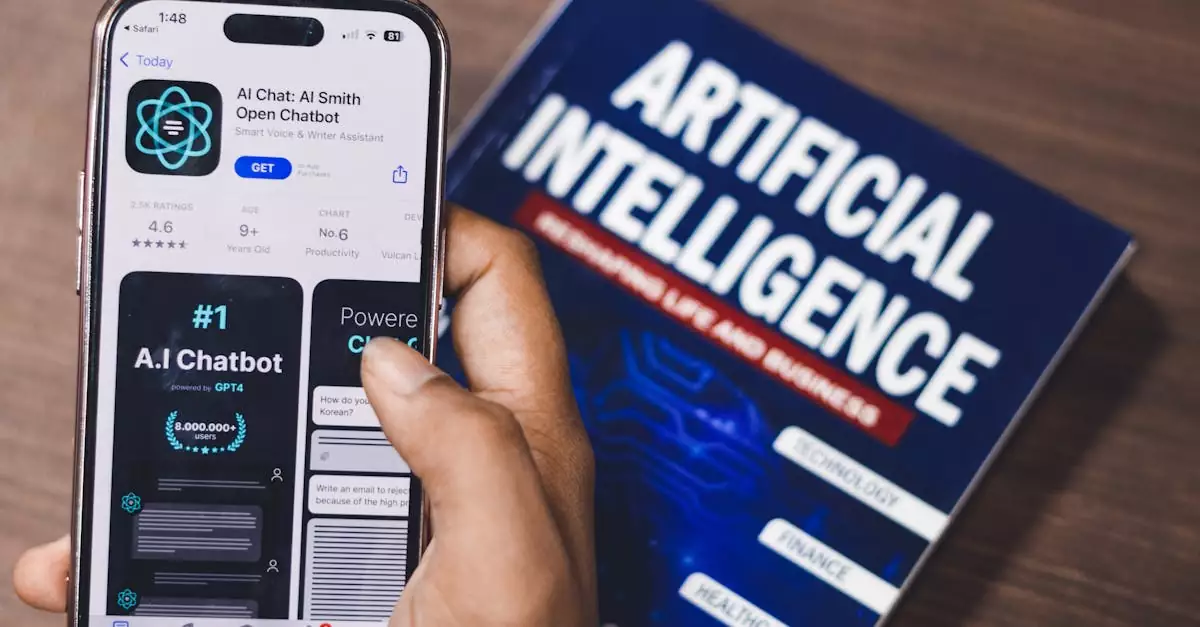
Artificial intelligence in 2026 helps businesses automate repetitive work, analyze data faster, improve customer experiences, and support better decisions in real time. The best results come from using AI for specific business problems, choosing tools that fit your workflow, and applying strong ethical oversight to protect trust, accuracy, and ROI.
How Artificial Intelligence Is Evolving Into a Business Advantage

Artificial intelligence has moved far beyond simple chatbots and basic automation. In 2026, it’s becoming a core business capability that helps organizations act faster, personalize experiences, and respond to market changes with more confidence. At its best, AI does not replace human decision-making; it strengthens it by processing large volumes of data, identifying patterns, and recommending actions that would be hard to spot manually.
One reason artificial intelligence applications are gaining traction is that the technology now fits into existing systems more easily than before. Businesses can connect AI to CRM platforms, analytics dashboards, support tools, and workflow software without rebuilding their entire stack. That makes adoption more practical for business owners, technology managers, and entrepreneurs who need results without a long transformation cycle.
Another major shift is the rise of real-time automation. Instead of waiting for weekly reports or manual approvals, teams can use AI to detect anomalies, flag opportunities, route tasks, and personalize content instantly. Based on testing and practical implementation patterns, the most effective AI deployments in 2026 are the ones tied to a specific operational bottleneck, such as lead qualification, fraud detection, inventory planning, or customer support triage.
For readers comparing artificial intelligence examples across industries, the pattern is clear: AI works best when it solves a high-volume, repeatable, data-rich problem. That could mean helping marketers generate campaign variations, enabling IT teams to identify threats faster, or supporting finance teams with forecasting. The technology is versatile, but the business value comes from focus, not novelty.
High-Impact Artificial Intelligence Applications Across Industries
Artificial intelligence applications are now visible across nearly every industry, but the strongest business value appears in functions where speed, accuracy, and scale matter. In healthcare, AI supports diagnostics, patient scheduling, and administrative automation. In retail, it powers recommendations, demand forecasting, and inventory optimization. In manufacturing, AI helps with predictive maintenance and quality control. In financial services, it supports fraud detection, risk modeling, and customer insights.
For business leaders, the most useful way to evaluate artificial intelligence in business is by looking at workflow impact. If a process is repetitive, rules-based, and time-consuming, AI can often improve it. For example, customer service teams can use AI to categorize tickets and suggest responses. Sales teams can prioritize leads based on behavioral signals. HR teams can screen applications more efficiently while still keeping humans involved in final decisions.
Marketing is another area where artificial intelligence examples are especially strong. AI can analyze audience behavior, generate content variations, optimize ad spend, and personalize email campaigns. However, the best-performing teams do not rely on AI alone. They combine automation with human review to keep messaging on-brand and compliant. That balance matters more in 2026 because customers are increasingly sensitive to authenticity and data usage.
When reviewing artificial intelligence tools 2026, leaders should look for platforms that integrate with business systems and support governance. IBM’s overview of enterprise AI at https://www.ibm.com/artificial-intelligence is a useful reference point for understanding how AI is being positioned in enterprise environments. For broader market context, Forbes regularly covers adoption patterns and business implications at https://www.forbes.com/artificial-intelligence.
Examples of AI applications by function
- Customer support: chat routing, response suggestions, sentiment analysis
- Marketing: content generation, audience segmentation, campaign optimization
- Sales: lead scoring, pipeline forecasting, next-best-action recommendations
- Operations: workflow automation, scheduling, inventory forecasting
- Finance: fraud detection, expense classification, risk analysis
- IT: incident detection, ticket triage, security monitoring
These artificial intelligence applications are not just about saving time. They also improve consistency, reduce human error, and help teams focus on higher-value work. Still, each use case should be evaluated carefully because AI is only as strong as the data and process behind it.
Why Artificial Intelligence Benefits Matter More in 2026
The artificial intelligence benefits businesses care about most in 2026 are not abstract. Leaders want measurable improvements in productivity, customer experience, decision speed, and profitability. AI can deliver all of those, but only when it is implemented with clear goals and realistic expectations. The biggest advantage is that AI helps teams do more with the same resources, which is especially valuable in competitive markets where margins are tight.
One of the most immediate benefits is time savings. AI can automate repetitive tasks such as data entry, document classification, meeting summaries, and support triage. That frees employees to focus on analysis, strategy, and relationship-building. Another major benefit is improved decision quality. AI can process more data than a human team can reasonably review, making it easier to identify trends and act earlier.
Artificial intelligence benefits also extend to customer experience. Businesses can use AI to respond faster, personalize interactions, and provide 24/7 support. In many industries, this leads to higher satisfaction and stronger retention. From practical experience, the companies that see the best ROI are usually the ones that use AI to remove friction from a customer journey rather than simply adding a new tool to the stack.
There is also a strategic benefit: AI can help businesses become more adaptive. In 2026, markets are changing quickly, and organizations need systems that can detect shifts in demand, customer behavior, and operational risk. AI-powered forecasting and monitoring tools make that possible. McKinsey’s analysis of AI maturity and adoption trends at https://www.mckinsey.com/business-functions/mckinsey-analytics/our-insights/the-state-of-ai-in-2026 is a strong resource for leaders who want a more strategic view of AI’s business impact.
Core benefits business leaders should expect
- Lower operational costs through automation
- Faster decision-making with real-time insights
- Better customer service and personalization
- Improved forecasting and planning
- Stronger productivity across teams
- More scalable processes without linear headcount growth
The key is to measure these benefits against business outcomes, not tool features. A platform may be impressive, but if it doesn’t reduce cycle time, improve conversion, or lower support costs, it may not justify the investment.
How Artificial Intelligence Automation Is Reshaping Daily Operations
Artificial intelligence automation is one of the most practical reasons businesses are adopting AI in 2026. Instead of using automation only for simple rule-based tasks, companies are now applying AI to workflows that involve judgment, language, and pattern recognition. That means more processes can be streamlined without losing flexibility.
For example, AI can automatically route customer inquiries based on urgency and topic. It can scan invoices for errors, identify duplicate records, and flag unusual transactions. In marketing, it can adjust campaign targeting based on live performance data. In operations, it can predict supply chain issues before they become expensive problems. These are not theoretical use cases; they are already being used by organizations looking to improve speed and efficiency.
What makes artificial intelligence automation different from traditional automation is its ability to adapt. Traditional automation follows fixed rules. AI can learn from historical patterns, update recommendations, and handle more variability. That makes it especially useful in environments where customer demands, product complexity, or data volume change frequently.
At the same time, automation should not be treated as a replacement for oversight. In real-world scenarios, the best AI systems include human checkpoints for sensitive decisions such as hiring, finance approvals, compliance reviews, and customer escalations. This is where ethical considerations become essential. Businesses that automate responsibly can improve ROI while protecting trust and reducing reputational risk.
For teams exploring artificial intelligence tools 2026, the best options are often the ones that support workflow orchestration, analytics, and human-in-the-loop controls. Leaders should look for tools that integrate with their current systems rather than forcing a complete operational redesign. That approach reduces implementation friction and speeds up adoption.
Artificial Intelligence Trends Shaping 2026
Several artificial intelligence trends are shaping how businesses plan their AI strategies in 2026. One of the biggest is the shift toward practical, domain-specific AI rather than generic experimentation. Companies want tools that solve a clear problem in finance, sales, marketing, operations, or support. This trend is pushing vendors to build more specialized solutions with better integration and governance.
Another major trend is real-time AI. Businesses increasingly want systems that can analyze live data and trigger immediate actions. This is especially important in customer service, cybersecurity, logistics, and digital marketing. Real-time automation helps organizations respond faster, which can improve conversion rates, reduce losses, and enhance customer satisfaction.
Ethical AI is also becoming a board-level concern. Leaders are paying more attention to transparency, bias reduction, data privacy, and model accountability. In 2026, businesses that ignore these issues risk compliance problems and loss of trust. The strongest AI programs are now built with governance from the start, not added later as a patch.
Another trend worth watching is the rise of AI copilots and embedded intelligence. Instead of requiring users to switch to separate tools, AI is increasingly built into the software people already use. That improves adoption because employees don’t need to learn a completely new system. It also makes AI more useful in daily work, where speed and convenience matter.
Finally, there is growing interest in multimodal AI, which can interpret text, images, audio, and structured data together. This opens new possibilities for customer support, product analysis, fraud detection, and content workflows. Business leaders should pay attention to these developments because they may unlock new efficiencies and competitive advantages over the next 12 months.
How to Choose the Right Artificial Intelligence Tools 2026
Choosing the right artificial intelligence tools 2026 requires more than comparing feature lists. The best tool for your business is the one that fits your workflow, data maturity, compliance requirements, and growth goals. A tool that looks impressive in a demo may fail in production if it doesn’t connect cleanly to your systems or if your team doesn’t trust its outputs.
Start by identifying the business problem you want to solve. Are you trying to reduce support volume, improve lead quality, forecast demand, or speed up reporting? That clarity will help you narrow the field. Next, evaluate how the AI tool handles integration. Tools that connect with CRM, ERP, marketing platforms, and analytics systems usually deliver faster value than standalone products.
Data quality is another critical factor. Artificial intelligence for beginners often starts with the assumption that more data automatically means better results, but that is not always true. Clean, relevant, well-structured data matters more than volume alone. If your data is fragmented or inconsistent, your AI outputs will likely be unreliable.
You should also assess governance features. Does the tool allow human review? Can you audit outputs? Does it support role-based access, explainability, and privacy controls? These questions matter because ethical and regulatory expectations are rising. Businesses that choose AI tools without governance often face problems later when they try to scale.
Finally, compare vendors based on implementation support and measurable outcomes. A strong vendor should help you define success metrics, pilot the use case, and refine the workflow based on results. That’s especially important for business owners and IT professionals who need a practical rollout plan rather than a vague promise of transformation.
| Evaluation Factor | What to Look For | Why It Matters |
|---|---|---|
| Integration | Works with existing business systems | Speeds adoption and reduces friction |
| Governance | Audit trails, human review, access controls | Supports ethical and compliant use |
| Data Readiness | Handles clean, structured, relevant data | Improves accuracy and reliability |
| ROI Potential | Clear metrics for time, cost, or revenue impact | Justifies investment |
Common Mistakes to Avoid When Adopting Artificial Intelligence
One of the most common mistakes businesses make is adopting AI without a clear use case. When teams buy tools first and define the problem later, adoption often stalls. The result is wasted budget, low usage, and disappointment. A better approach is to start with a specific workflow that has measurable pain points.
Another mistake is overestimating what AI can do on its own. Even advanced artificial intelligence applications still require human oversight, quality data, and process design. If your internal workflow is broken, AI will usually make the problem faster, not better. That’s why process cleanup should come before automation.
Many organizations also underestimate the importance of change management. Employees may resist AI if they think it threatens their role or adds complexity. Leaders need to communicate that AI is meant to support productivity, not simply cut headcount. Training, transparency, and phased rollout help reduce resistance and improve adoption.
Data privacy and compliance are another major risk area. Businesses that collect customer or employee data must understand how AI tools store, process, and secure that information. This is especially important in regulated industries or when using external platforms. Ethical considerations are not optional in 2026; they are central to long-term success.
Finally, many teams fail to measure outcomes properly. If you cannot show that AI improved speed, reduced cost, or increased revenue, it becomes difficult to justify continued investment. The best AI programs define success metrics before launch and review them regularly after deployment.
Real-World Use Cases for Business Leaders, Marketers, and IT Teams
Artificial intelligence use cases become most valuable when they solve real operational problems. For business owners, AI can help identify which products are selling fastest, which customers are most likely to churn, and where the business is losing time. For entrepreneurs, AI can reduce the workload of small teams by automating research, content planning, and customer communication.
Technology managers often use AI to improve incident response, monitor system health, and detect anomalies before they cause downtime. In IT environments, artificial intelligence automation can triage support tickets, prioritize alerts, and help teams focus on the most urgent issues. That leads to faster resolution and better service levels.
Marketers can use AI to personalize campaigns, analyze customer journeys, and generate creative variations for testing. In practice, the strongest marketing teams use AI to accelerate experimentation while keeping a human strategist in control of brand voice and messaging. That combination improves speed without sacrificing quality.
Finance teams can use AI to detect fraud patterns, classify expenses, and forecast cash flow more accurately. HR teams can use it to screen resumes, schedule interviews, and analyze workforce trends. Operations teams can use AI to predict demand, optimize inventory, and reduce waste. These are all examples of how artificial intelligence in business can create value across departments.
What makes these use cases compelling in 2026 is the combination of real-time automation and ethical oversight. Businesses no longer need to choose between speed and responsibility. The most effective deployments use AI to automate routine tasks while keeping humans in the loop for decisions that affect customers, employees, or compliance outcomes.
Who benefits most from AI adoption?
- Business owners who need scalable growth without proportional cost increases
- Technology managers who want faster incident handling and better system visibility
- Entrepreneurs who need to move quickly with lean teams
- IT professionals who manage data, security, and workflow reliability
- Marketers who need personalization, testing, and content efficiency
Pros and Cons of Artificial Intelligence Solutions in 2026
Artificial intelligence offers meaningful advantages, but it also comes with trade-offs. A balanced view helps leaders make smarter decisions and avoid unrealistic expectations. Based on testing and implementation patterns across industries, the strongest AI programs are the ones that understand both sides clearly.
Pros: AI improves efficiency by automating repetitive work, which saves time and reduces labor costs. It enhances decision-making by analyzing large volumes of data quickly. It can improve customer experiences through personalization and faster response times. It also supports scalability, allowing teams to handle more work without increasing headcount at the same pace.
Cons: AI can produce inaccurate outputs if the data is poor or the model is misconfigured. It may introduce bias if ethical safeguards are weak. Some tools require significant setup, training, or integration work. There is also the risk of over-automation, where businesses rely too heavily on AI and lose human judgment in critical areas.
When evaluating artificial intelligence benefits against risks, the most important question is not whether AI is powerful. It is whether the business has the maturity to use it responsibly. In many cases, the answer is yes, but only when leaders invest in governance, training, and clear performance metrics.
| AI Area | Pros | Cons |
|---|---|---|
| Customer Support AI | 24/7 availability, faster responses, lower support costs | May misunderstand complex issues, needs human escalation |
| Marketing AI | Personalization, content speed, better targeting | Can sound generic without human editing, brand risk |
| Operations AI | Forecasting, workflow efficiency, reduced errors | Depends heavily on data quality and process design |
| IT AI | Faster alert handling, better monitoring, improved triage | False positives and missed signals if not tuned properly |
Expert Insight: The 2026 AI Advantage Comes From Trust and Speed Together
The most important shift in artificial intelligence trends for 2026 is that businesses no longer gain an edge from speed alone. Speed without trust creates risk. Trust without speed creates inefficiency. The real advantage comes from combining real-time automation with ethical guardrails, so AI can act quickly while still remaining transparent, auditable, and aligned with business values.
In practical terms, this means the best AI strategies are not built around replacing people. They are built around improving how people work. The businesses that will outperform others are the ones that use AI to remove delays, surface better insights, and support decision-making while maintaining human accountability. That is especially true in customer-facing and regulated environments where mistakes can be costly.
Another insight from current market behavior is that ROI is increasingly tied to workflow precision. Businesses do not need AI everywhere; they need it in the right places. A single well-designed automation in lead routing, support triage, or demand forecasting can outperform several loosely connected AI experiments. For leaders, the lesson is simple: focus on high-impact processes, measure outcomes rigorously, and build trust into every layer of deployment.
Conclusion: What Business Leaders Should Do Next
Artificial intelligence in 2026 is no longer a future trend to watch from the sidelines. It is a practical business capability that can improve operations, increase productivity, and strengthen customer experiences when used strategically. The companies that benefit most are the ones that start with clear use cases, choose the right tools, and apply AI with ethical oversight from day one.
If you are a business leader exploring AI integration, the smartest next step is to identify one process that is repetitive, data-heavy, and measurable. Start small, test carefully, and expand only when the results are clear. That approach reduces risk while building internal confidence and momentum. Artificial intelligence can deliver real value in 2026, but only if it is implemented with purpose.
From artificial intelligence applications in marketing and operations to artificial intelligence automation in customer service and IT, the opportunities are broad. The challenge is not finding use cases; it is choosing the ones that align with your goals. With the right strategy, AI can become one of the most powerful drivers of growth, resilience, and ROI in your business.
FAQs
What is artificial intelligence in simple terms?
Artificial intelligence is technology that enables machines to perform tasks that normally require human intelligence, such as analyzing data, recognizing patterns, understanding language, and making recommendations. In business, AI is often used to automate tasks, improve decisions, and personalize customer experiences.
What are the most useful artificial intelligence applications for businesses?
The most useful artificial intelligence applications include customer support automation, marketing optimization, sales forecasting, fraud detection, inventory planning, and IT monitoring. These use cases are valuable because they improve speed, reduce manual work, and create measurable business outcomes.
What are the main artificial intelligence benefits in 2026?
The main artificial intelligence benefits in 2026 include faster decision-making, improved productivity, lower operating costs, better customer experiences, and more scalable workflows. Businesses also benefit from real-time insights and automation that help them respond quickly to changing conditions.
Is artificial intelligence difficult for beginners to use?
Artificial intelligence for beginners is easier than it used to be because many tools now include simple interfaces and built-in automation. The key is to start with one clear use case, learn the basics of data quality and workflow design, and choose tools that integrate with systems you already use.
How does artificial intelligence automation improve ROI?
Artificial intelligence automation improves ROI by reducing time spent on repetitive work, lowering error rates, and helping teams focus on higher-value tasks. It can also improve conversion, retention, and forecasting accuracy, which creates both cost savings and revenue opportunities.
What should business leaders look for in artificial intelligence tools 2026?
Business leaders should look for integration capabilities, governance features, data handling quality, and measurable ROI potential. The best tools fit existing workflows, support ethical use, and provide clear ways to track performance over time.
What are the biggest risks of adopting artificial intelligence?
The biggest risks include poor data quality, biased outputs, weak governance, over-automation, and low employee adoption. These risks can be managed by starting with a focused use case, involving human oversight, and measuring results carefully before scaling.